From compliance to operational resilience: the evolution of training in cybersecurity
As organizations increasingly look to cyber range platforms to train, evaluate, and scale their cybersecurity capabilities, the need for realistic, high-performance environments has never been greater. This shift is further accelerated by regulatory frameworks such as the NIS2 Directive, which place new obligations on organizations to strengthen cybersecurity readiness, ensure continuous staff training, and demonstrate measurable capabilities in managing cyber risks.
CyberEDU & UNbreakable Romania 2026: setting the standard for platform infrastructure stability
UNbreakable Romania stands out as a national cybersecurity education program designed to identify, train, and validate emerging talent through hands-on learning. By combining structured training and Capture The Flag (CTF) competitions, the program creates a pipeline from foundational skills to advanced, real-world capabilities, effectively bridging the gap between education and industry requirements.
The 2026 edition culminated in a high-intensity team-based CTF final that moved beyond showcasing individual skills, highlighting instead the convergence of platform scalability and advanced challenge design.
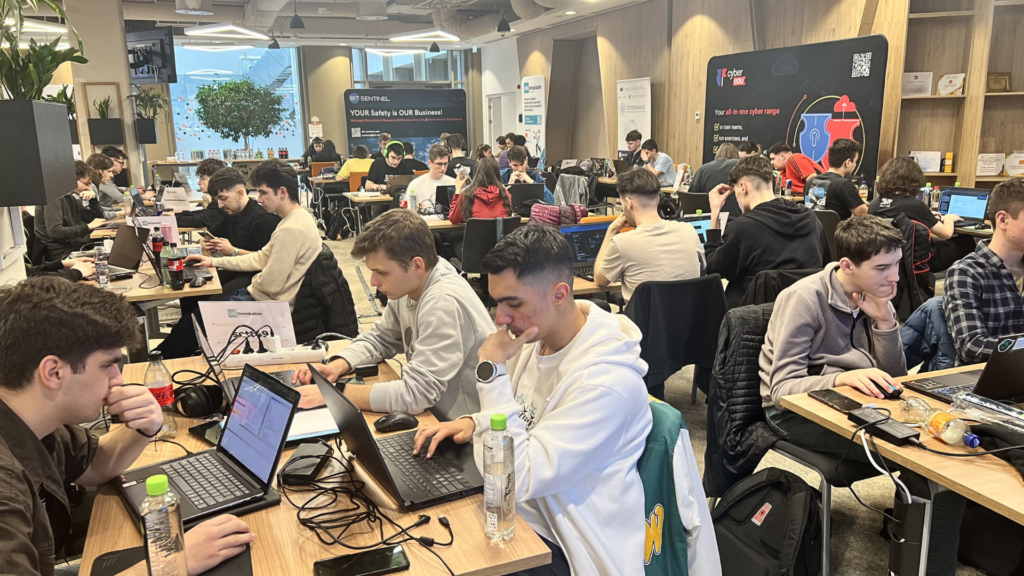
More than a traditional competition, the event served as a real-world stress test for the CyberEDU infrastructure. It demonstrated that a modern cyber range must do more than just host content; it must act as a high-performance enabler for seamless team collaboration, maintaining stability under load while delivering increasingly complex, dynamic attack scenarios.
Platform stability and trust at scale: results for CyberEDU, from the UNbreakable Romania 2026 season
A defining achievement of this year’s qualification phase (March 6-8) and the team finals (March 27-29) was the robustness of the CyberEDU platform under peak demand. Beyond raw performance metrics, the infrastructure ensured a controlled and secure environment, allowing participants to focus entirely on collective problem-solving rather than technical latency. This level of operational stability is critical in high-stakes scenarios, where even minor disruptions can impact both fairness and user experience.
The platform’s operational success was defined by:
- seamless support for 294 teams during the qualification phase;
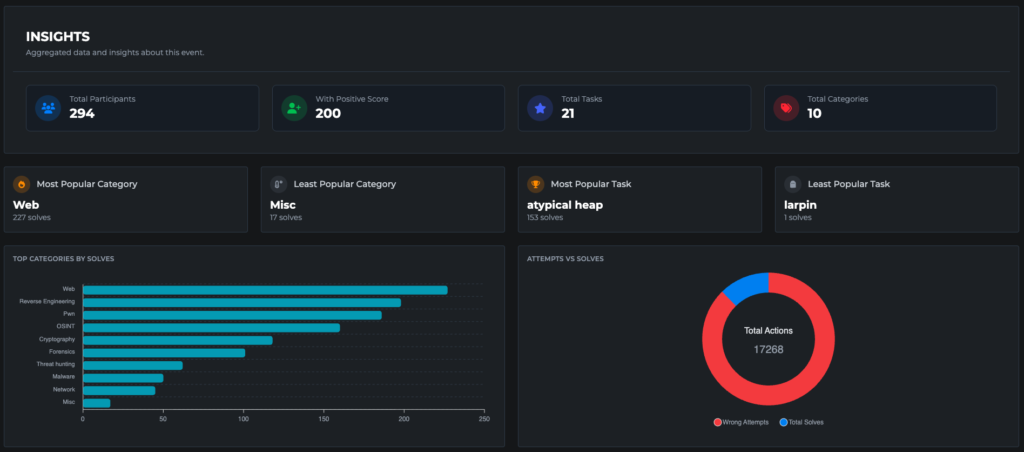
- real-time scoring and dynamic challenge deployment, with no major disruptions;
- consistent, high-performance delivery during peak load in the finals;
- integrated proctoring and monitoring capabilities during the finals, ensuring fairness, preventing misconduct, and maintaining the integrity of the competition.
By maintaining uninterrupted availability, CyberEDU provided a resilient foundation for large-scale cybersecurity exercises. This stability allowed organizers to deploy complex scenarios with total confidence, while ensuring the competitive experience remained professional and merit-based.
UNbreakable Romania Finals 2026 - challenge difficulty & solver insights
The UNbreakable Romania 2026 final was designed to push competitors to their limits, reflecting a deliberate shift toward more advanced, real-world aligned challenge design.
To accurately map the talent landscape, the competition utilized a sophisticated difficulty curve across a diverse range of disciplines:
- a total of 11 challenges across 7 categories assessed a broad spectrum of technical competencies, from foundational skills to advanced exploitation techniques;
- high-complexity challenges such as “Watchdog” (Cloud) and “cash256” (Reverse Engineering) were solved only once, effectively distinguishing top-tier teams;
- at the other end of the spectrum, accessible challenges like “adder” (Misc) recorded 15 successful solves, ensuring engagement across varying skill levels.
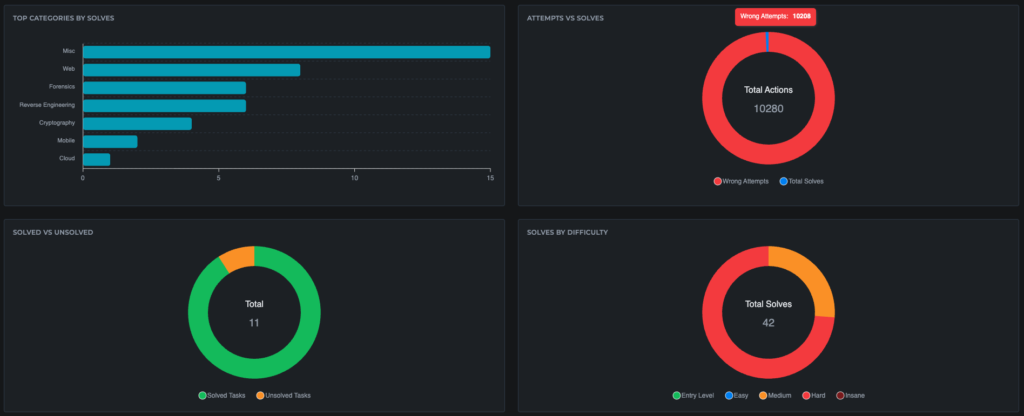
This distribution of solves highlights a carefully engineered difficulty curve, designed not only to rank performance, but to create a meaningful progression for participants. The result is a competition environment that challenges elite teams while remaining inclusive for emerging talent, mirroring the layered complexity of real-world cybersecurity scenarios.
AI vs Humans: a historic first, towards AI-native cyber range platforms
The UNbreakable Romania 2026 Finals marked a pivotal shift in cybersecurity training and competitions: for the first time, teams competed alongside an autonomous AI agent, CyberEDU AI, redefining how performance, automation, and human expertise intersect within a cyber range environment.

This milestone is all the more significant as it follows the earlier release of the official CyberEDU MCP server, which had already begun empowering over 30,000 users to train faster and smarter. This evolution proves that the future of the industry isn’t just about human skill, but about the seamless integration of AI-driven automation into the very fabric of security operations.
The integration of this agent provided a unique benchmark for performance, revealing both the current capabilities and the inherent limitations of AI in high-stakes security operations:
- the AI agent achieved an 81.2% success rate (9/11 challenges solved), demonstrating strong performance in structured, logic-driven scenarios, with a 64.3% accuracy rate overall;
- it secured first solve on 7 challenges, highlighting its ability to rapidly process and execute deterministic tasks;
- human teams reached a 32.7% success rate, leveraging iterative approaches, collaboration, and diverse problem-solving strategies;
- in areas such as Forensics, human participants outperformed the AI, reinforcing the value of contextual reasoning, investigative thinking, and adaptability.
These results highlight a clear division of strengths: while AI excels in speed, pattern recognition, and structured problem-solving, human teams maintain a critical advantage in ambiguity handling, contextual analysis, and creative investigation.
Moreover, while the AI agent secured first place, the narrow performance gap highlights a critical reality: the future of cybersecurity is not AI versus humans, but AI-augmented human expertise.
From a platform perspective, this evolution signals the emergence of AI-native cyber range environments, where AI is embedded not only as a learning assistant, but as an autonomous participant capable of benchmarking performance, generating adaptive challenges, and simulating real-world adversarial behavior.
For organizations, this opens the door to a new generation of training and evaluation capabilities: scalable, data-driven, and continuously evolving to match the complexity of modern threat landscapes.
Future shifts in cyber range architecture and performance
The UNbreakable Romania 2026 finals highlighted a fundamental shift in how cybersecurity training, evaluation, and talent development must evolve to remain relevant in an increasingly complex threat landscape.
From the CyberEDU perspective, 3 critical directions are becoming clear:
1. Cyber range platforms must scale reliably and securely
As participation grows and scenarios become more complex, platforms need to deliver consistent performance under load, ensuring stability, fairness, and real-time responsiveness in high-stakes environments.
2. Challenge design must mirror real-world complexity
Static exercises are no longer sufficient. Modern training environments require dynamic, multi-layered challenges that reflect real attack scenarios, enabling participants to develop practical, job-ready skills.
3. AI is becoming a core component of cybersecurity ecosystems
No longer limited to assistance roles, AI is emerging as an active participant – capable of solving challenges, benchmarking human performance, generating adaptive scenarios, and simulating adversarial behavior at scale.
As cyber range platforms are increasingly used for certification, talent validation, and compliance-driven training (including regulatory frameworks like NIS2), ensuring fairness, identity verification, and activity monitoring becomes critical. Integrated proctoring is no longer optional, but a foundational capability for maintaining trust, preventing misconduct, and enabling credible, large-scale evaluation.
From a platform perspective, this signals the transition toward AI-native cyber range environments, where human expertise and machine intelligence operate side by side. This hybrid model enables continuous learning, more accurate skills assessment, and a significantly higher level of realism in training exercises.
Building national cybersecurity capability starts with CyberEDU & UNbreakable Romania
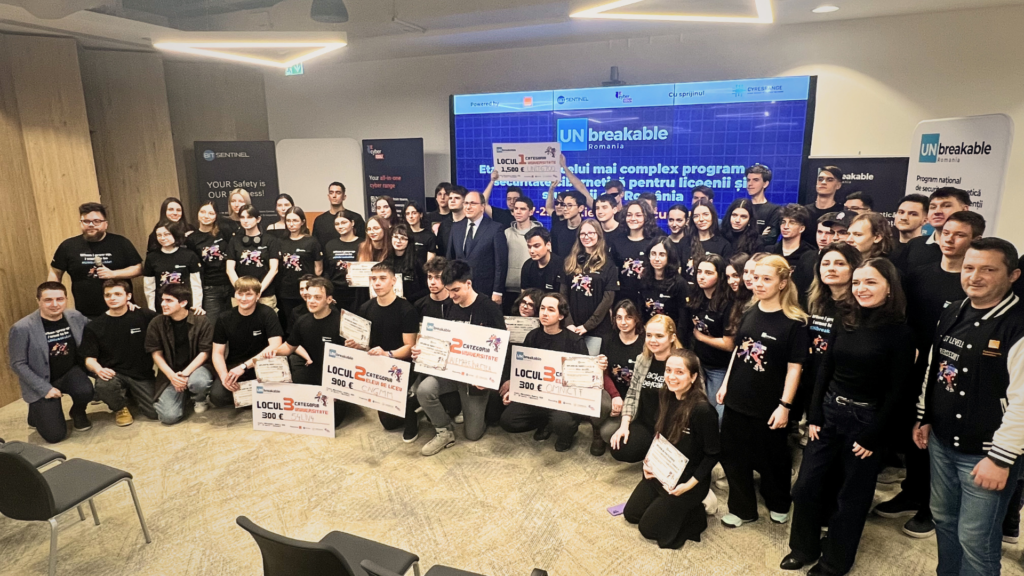
UNbreakable Romania 2026 proved what is possible when cybersecurity education is approached at scale, with the right infrastructure, the right partnerships, and the right vision.
For government institutions and national stakeholders, the challenge is clear: how to develop, assess, and continuously upskill cybersecurity talent across an entire ecosystem, efficiently, securely, and at scale.
CyberEDU is designed to support exactly this mission.
With a scalable, AI-enabled cyber range platform, CyberEDU empowers national programs to:
- deliver standardized, hands-on cybersecurity training across regions;
- support large-scale competitions, exercises, and talent identification initiatives;
- ensure fairness and integrity through integrated proctoring and monitoring;
generate data-driven insights to inform policy, curriculum development, and workforce strategy.
From nationwide education programs – like UNbreakable Romania 2026 – to specialized training for critical sectors, CyberEDU provides the infrastructure needed to build a resilient and future-ready cyber workforce.