The short version
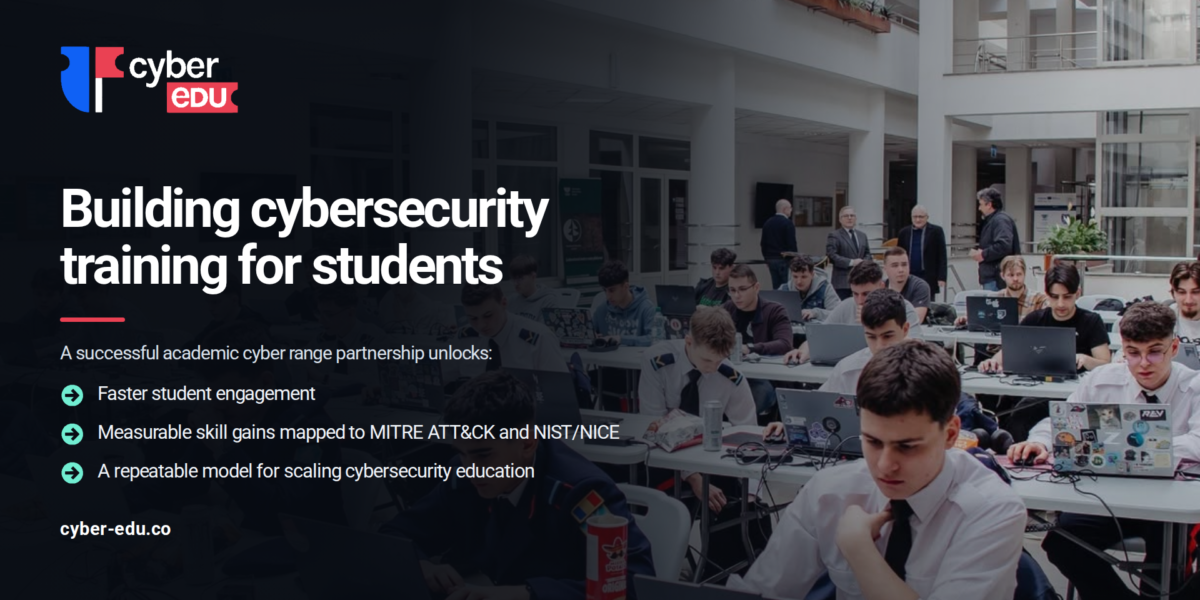
A successful academic cyber range partnership follows four stages: needs assessment, curriculum integration, live-fire deployment (labs and exercises), and outcome measurement. Institutions that follow this framework typically see faster student engagement, measurable skill gains mapped to MITRE ATT&CK and NIST/NICE frameworks, and a repeatable model for scaling cybersecurity education without building infrastructure in-house.
A platform alone won't change anything - here's what will
Buying access to a cyber range is the easy part. The harder – and more valuable – work is turning that access into a program that actually changes student outcomes. Institutions that treat a cyber range as a bolt-on tool rarely see results. Institutions that treat it as a curriculum partnership do.
This is the pattern that shows up across academic cybersecurity programs, from general computer science departments to specialized tracks like industrial control systems, healthcare, or critical infrastructure security. The strongest programs treat range-based training as a core part of the curriculum rather than a generic add-on – building scenarios specific to their sector instead of relying on one-size-fits-all content.
Below is a framework any department chair, program director, or curriculum lead can use to structure a similar partnership.
Stage 1: Figure out what your program actually needs (before you touch any tech)
Before any technical integration happens, a partnership should start with a clear-eyed assessment of:
- Program level: Is this an introductory security course, a dedicated cybersecurity major, or a graduate/specialized track (e.g., industrial control systems, SCADA, healthcare)?
- Existing curriculum gaps: Where does theory outpace practice? Common gap areas include incident response, digital forensics, offensive/defensive (red vs. blue) exercises, and adversary technique recognition.
- Infrastructure constraints: Does the institution have the budget, staff, or appetite to maintain on-premises lab infrastructure, or is a hosted, scalable model preferable?
- Accreditation and framework alignment: Many programs need to demonstrate alignment with recognized frameworks for accreditation or grant reporting purposes – most commonly the NIST/NICE Workforce Framework for Cybersecurity, which classifies skills using Knowledge, Skills, and Abilities (KSA) statements. Mapping courses and exams to specific KSAs makes it far easier to show employers and accreditors exactly what a graduate can do. Increasingly, regulatory requirements like NIS2 are also pushing hands-on cybersecurity training up the priority list for institutions across Europe.
This stage produces a scoping document that defines success before a single lab is deployed.
Stage 2: Make it part of the course, not an optional extra
This is where a cyber range partnership either becomes a core part of the learning experience or gets relegated to “extra credit” status. The strongest integrations:
- Map specific labs to specific weeks or modules in the syllabus, rather than offering them as standalone extracurriculars.
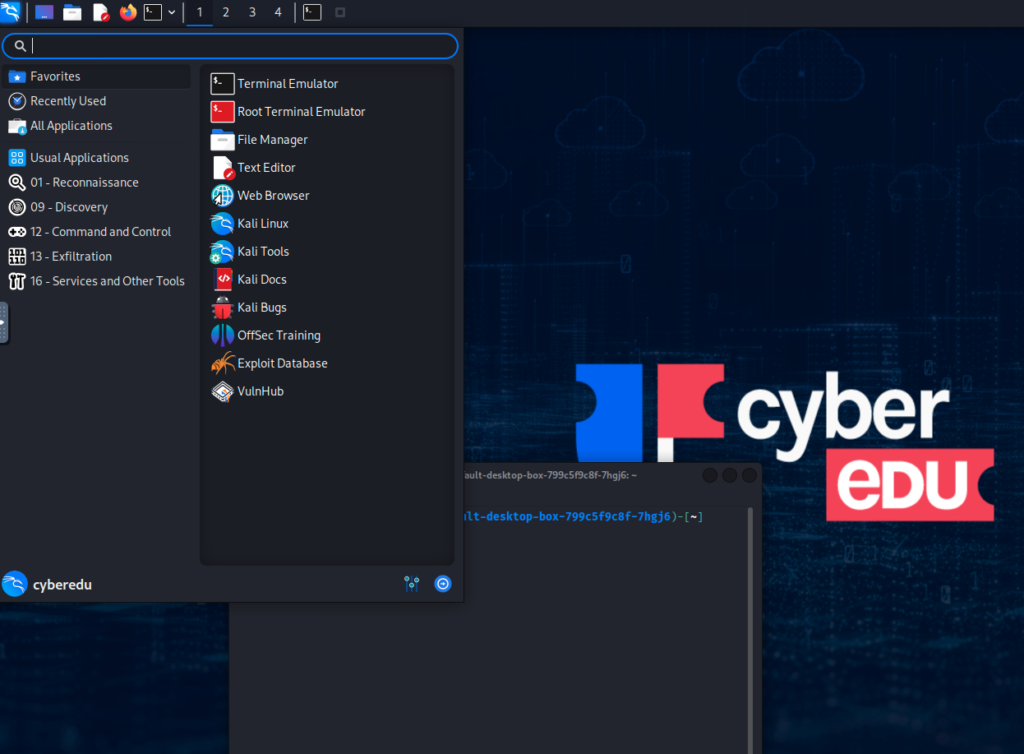
- Use MITRE ATT&CK-mapped scenarios so that lab work reinforces the same taxonomy students are learning in lecture.
- Combine existing course materials with custom, scenario-based exercises tailored to the institution’s focus area.
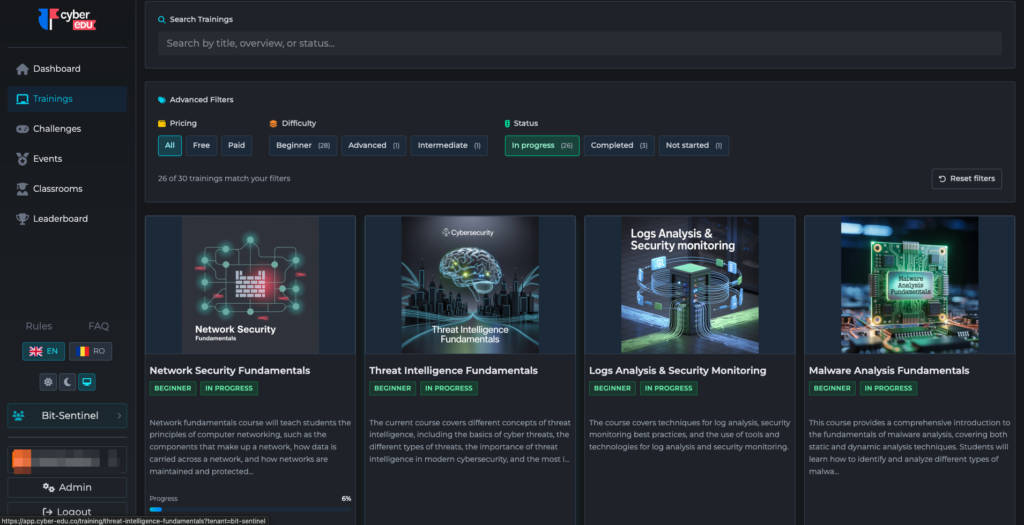
- Use pre-built courses and exams that are already mapped to NIST/NICE KSA statements, so instructors don’t have to build workforce-framework alignment from scratch for every module. CyberEDU’s own training catalog already includes ready-to-assign options departments can drop straight into a syllabus – from beginner-friendly courses like CTF 101, to full career-path tracks (SOC Analyst, Penetration Tester, Red Team Operator), to compliance-adjacent courses covering NIS2, ISO 27001, and GDPR.
- Build in progressive difficulty – foundational labs early in the term, more complex red-vs-blue or live-fire exercises later.
Stage 3: Let students break things (safely) with live-fire deployment - labs, live-fire exercises, and competitions
Once integrated into the curriculum, the range becomes the delivery mechanism for:
- Hands-on labs – browser-based, auto-graded exercises that let students practice specific techniques without needing local infrastructure.
- Live-fire exercises – realistic, scenario-based simulations where students respond to an unfolding incident (an active intrusion, a ransomware outbreak, a compromised network segment) rather than a static challenge, which is what most academic programs use to build practical, job-ready skill.
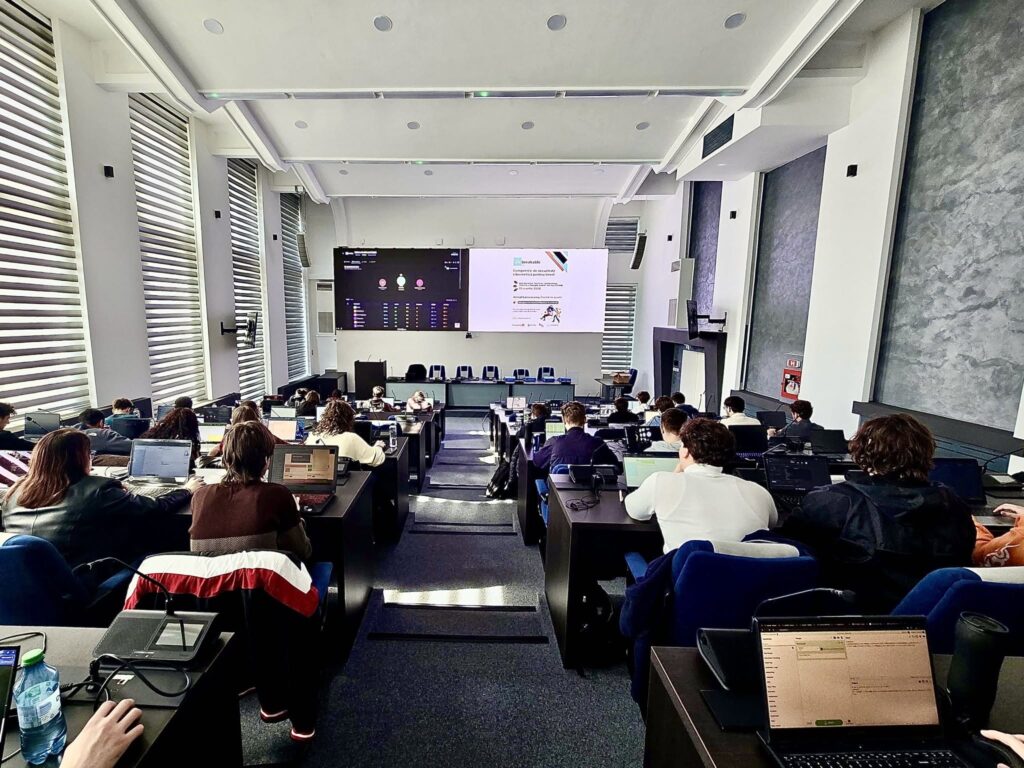
- Competitions and tournaments – for programs that want an added layer of engagement, competitive gamified formats increase motivation and give students a taste of real security competitions. CyberEDU’s own experience running large-scale events like UNbreakable Romania shows how competition formats can turn a classroom exercise into a genuine talent pipeline for the next generation of defenders.
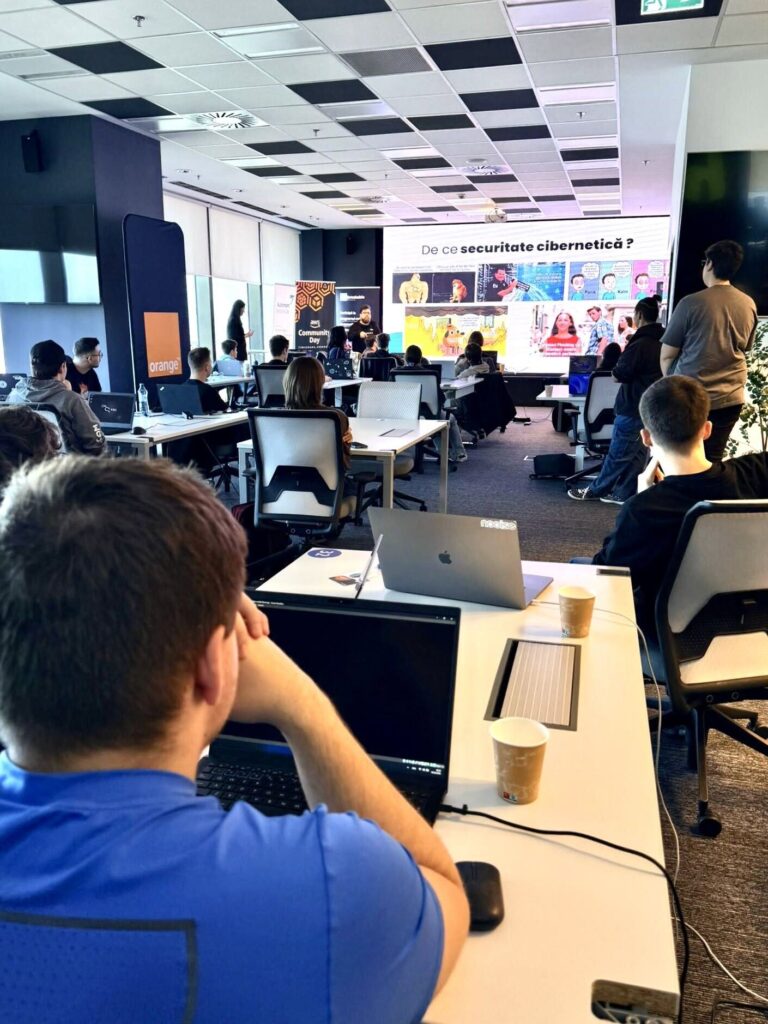
- Red vs. Blue exercises – structured offense/defense scenarios that mirror how security teams actually operate in the field, run on the same Cyber Range infrastructure used for enterprise and government training.
- Exams and certifications – using the same environment for both formative labs and summative assessment keeps evaluation consistent with how students actually learned the material. Built-in proctoring, like CyberEDU’s CYE-SENTINEL, also gives departments a way to run high-stakes exams and live-fire assessments with confidence that results reflect each student’s own knowledge and skill.
For programs with a specialized focus – industrial, healthcare, or critical infrastructure – this stage is where hybrid IT/OT or SCADA/ICS scenarios become especially valuable, since generic cybersecurity content rarely covers these environments in depth.

Stage 4: Prove it worked
A case study is only as strong as its evidence. Departments should track:
- Engagement metrics: lab completion rates, time-on-platform, live-fire exercise participation rates.
- Skill progression: performance improvement across MITRE ATT&CK technique categories over the course of a term.
- Assessment outcomes: pass rates on practical exams compared to prior, lecture-only formats.
- Downstream indicators: internship placement, employer feedback, or student-reported confidence entering the workforce.
Institutions that document these metrics consistently are also the ones best positioned to renew grant funding, justify budget for program expansion, and market their cybersecurity program to prospective students – the same students who, if you look at events like UNbreakable Romania, go on to represent their universities in national and international competitions, including the European Cybersecurity Challenge (ECSC), well before graduation.
FAQ
What is an academic cyber range partnership? It’s a structured collaboration between a university and a cyber range provider where hands-on labs, live-fire exercises, and competitive formats like CTFs and/or cyber tournaments are integrated directly into the cybersecurity curriculum, rather than offered as a standalone tool.
How long does it take to integrate a cyber range into a curriculum? Most institutions can go from initial planning to their first live-fire exercises within a single academic term. From there, they can gradually expand with custom scenarios and certification-aligned content over the following terms – making adoption straightforward and scalable.
Do we need our own infrastructure to run cyber range exercises? Not necessarily. Cyber-range-as-a-service models enable institutions to deliver browser-based labs and live-fire exercises without maintaining their own physical infrastructure, significantly lowering the barrier to entry. For institutions that prefer a dedicated environment, cyber ranges can also be deployed in on-premises physical facilities or hybrid setups, providing greater control and flexibility as programs grow.
Can a cyber range support specialized programs like industrial or critical infrastructure cybersecurity? Yes. Providers increasingly offer hybrid IT/OT and SCADA/ICS scenarios tailored to specific sectors, which is especially valuable for programs outside general enterprise IT security.
How does NIST/NICE workforce classification fit into a cyber range partnership? The NIST/NICE Workforce Framework for Cybersecurity classifies job-relevant skills using Knowledge, Skills, and Abilities (KSA) statements. When courses, exams, and live-fire exercises are mapped to specific KSAs, departments can show accreditors, employers, and grant reviewers precisely which workforce competencies a graduate has demonstrated – rather than relying on a course title alone.
CyberEDU works with academic institutions to design curriculum-integrated cyber range programs from the ground up – from initial needs assessment through to running full-scale competitions like UNbreakable Romania.
- See what’s possible: Explore CyberEDU’s Center of Excellence for Academia to see how the platform supports universities specifically.
- Browse what’s ready to use: The CyberEDU training catalog already has structured learning paths and standalone courses departments can assign directly – no need to build content from scratch for Stage 2.
- Look under the hood: Check out the Cyber Range and Cyber Labs platform pages for the technical detail behind Stage 3 of this framework, or the full platform overview for everything in between.
- Talk to the team: Book a demo and we’ll help you scope Stage 1 for your own program.
And if you want more on where academic cybersecurity training is headed, browse the rest of the CyberEDU Blog – including our take on why NIS2 makes cybersecurity training essential, a full rundown of CyberEDU’s platform capabilities, and the story behind building the next generation of cyber defenders at UNbreakable Romania.