Cybersecurity threats are increasing in both frequency and sophistication, affecting organizations of all sizes across Europe. Ransomware attacks, supply chain compromises, phishing campaigns, and data breaches have become everyday risks.
But while companies continue to invest heavily in security tools, the most critical cybersecurity gap is not technology – it’s people.
Security platforms cannot detect threats, investigate incidents, or secure infrastructure without skilled professionals behind them.
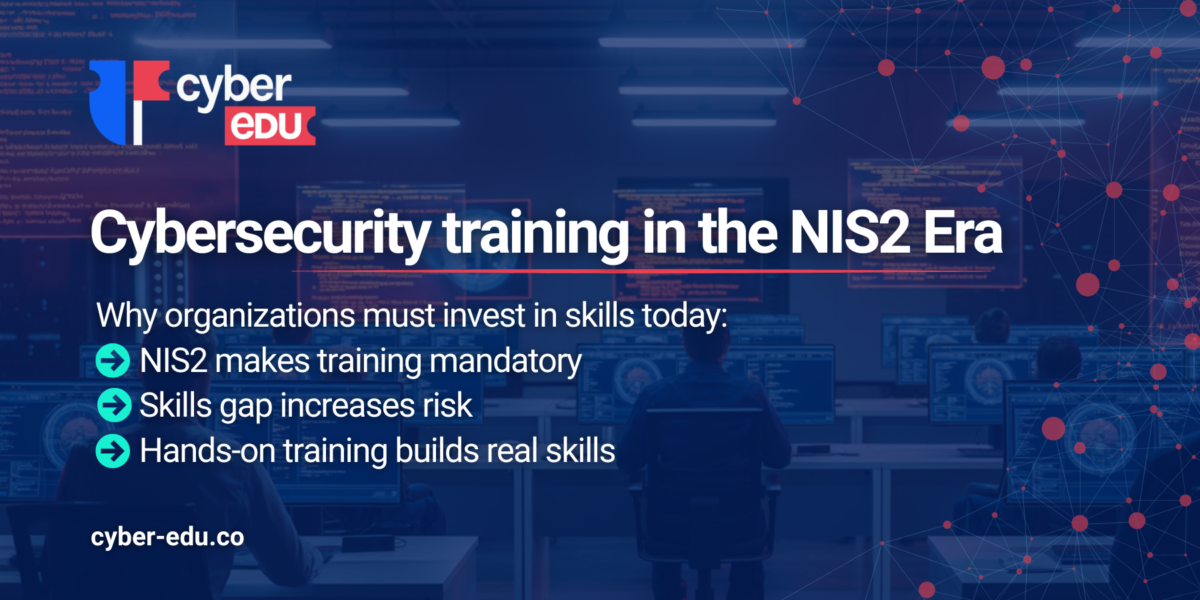
At the same time, the introduction of the NIS2 Directive has transformed cybersecurity from a technical best practice into a regulatory requirement for thousands of organizations across the European Union. As a result, cybersecurity training has become a strategic priority for both organizations and professionals.
To support this need, CyberEDU has launched a new collection of hands-on cybersecurity training designed to build real-world defensive capabilities.
The cybersecurity skills gap is the real risk
The global demand for cybersecurity professionals continues to rise as organizations adopt more digital technologies, cloud services, and interconnected systems. According to ISC2, to meet current demand and to effectively defend organizations’ critical assets, the global cybersecurity workforce needs to grow 65%.
Today’s security environments, in companies spanning from small startups and mid-sized businesses (SMEs) to global enterprises and critical infrastructure, often incorporate some or all of the following:
- SIEM platforms
- Endpoint Detection and Response (EDR)
- Cloud security monitoring
- Threat intelligence platforms
- Vulnerability management tools
While these technologies are powerful, they require skilled professionals who understand how to interpret alerts, investigate incidents, and respond to threats.
Unfortunately, many organizations struggle with:
- shortage of qualified cybersecurity professionals;
- limited practical experience among junior staff;
- overloaded security teams;
- lack of hands-on incident response capabilities.
This skills gap is one of the main reasons cyber attacks continue to succeed. Cybersecurity training is therefore essential to transform knowledge into operational capability.
How NIS2 is changing cybersecurity requirements in Europe
The NIS2 Directive represents one of the most significant regulatory developments in European cybersecurity.
It expands the scope of the original NIS Directive and introduces stricter security and governance requirements for organizations across critical and important sectors.
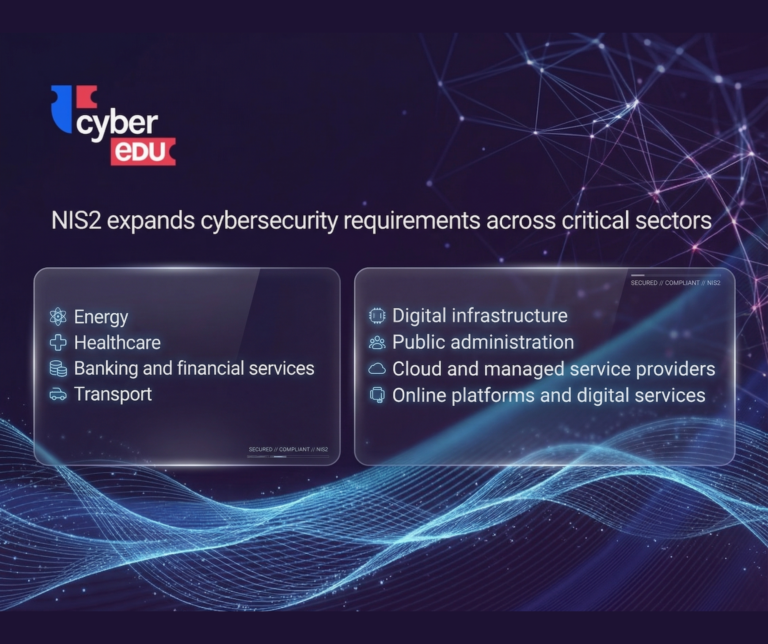
For many organizations, NIS2 introduces cybersecurity obligations for the first time.
Under Article 21(2) of the NIS2 Directive, essential and important entities are required to implement at least 10 core cybersecurity risk-management measures:
- risk analysis and information system security policies;
- incident handling;
- business continuity and crisis management;
- supply chain security;
- security in network and information systems;
- assessing effectiveness;
- basic cyber hygiene and training;
- cryptography and encryption;
- human resources security, access control, and asset management;
- multi-factor authentication (MFA) and secure communications.
NIS2 also introduces a tiered penalty system based on the entity’s classification:
- essential entities: fines up to €10 million or 2% of global annual turnover, whichever is higher;
- important entities: fines up to €7 million or 1.4% of global annual turnover, whichever is higher.
One of the most important changes introduced by NIS2 is executive accountability.
Management bodies are now responsible for ensuring that their organizations implement adequate cybersecurity risk management measures, such as:
- incident detection and response capabilities;
- secure system and network architecture;
- vulnerability management and patching processes;
- supply chain security;
- cybersecurity awareness and employee training.
In other words, organizations must now demonstrate that they have the operational capability to effectively detect, respond to, and recover from cyber incidents.
In practice, this means that companies must invest not only in security technology and tools, but also in developing the skills of their cybersecurity teams.
Why hands-on cybersecurity training matters in the NIS2 era
Many cybersecurity professionals gain theoretical knowledge through certifications, courses, or academic programs. However, theory alone rarely prepares someone for a real cyber incident.
Moreover, given the strict requirements introduced by NIS2, a theory-only approach to cybersecurity training lacks both effectiveness and real-world applicability. Organizations that rely solely on theoretical training for their cybersecurity professionals may find it significantly more challenging to meet NIS2 compliance requirements.
Effective cybersecurity training focuses on hands-on learning and real attack simulations, because participants gain practical experience in areas such as:
- threat detection and investigation;
- security monitoring and log analysis;
- vulnerability discovery and exploitation techniques;
- incident response and digital forensics;
- understanding attacker tactics and methodologies.
Furthermore, training in realistic environments allows professionals to build technical intuition and practical problem-solving skills that are critical during security incidents.
Benefits of hands-on cybersecurity training for organizations
Organizations that invest in hands-on cybersecurity training gain several strategic advantages.
1. Stronger cyber resilience
Trained security teams can detect threats earlier and implement effective defensive strategies.
2. Faster incident response
When attacks occur, experienced professionals can investigate and contain incidents more quickly.
3. NIS2 compliance readiness
Cybersecurity training supports organizations in meeting regulatory expectations related to security capabilities, operational readiness, and staff awareness.
4. Reduced operational risk
Human error and misconfiguration remain leading causes of breaches. Training significantly reduces these risks.
Benefits for cybersecurity professionals
Cybersecurity training also offers major benefits for individuals pursuing a career in the field.
Hands-on training helps professionals:
- build practical cybersecurity skills;
- understand real attacker techniques;
- develop incident response expertise;
- gain confidence in complex environments;
- increase their value in the job market;
- keep their skills at the highest level.
As cyber threats evolve, continuous learning becomes essential for staying relevant in the cybersecurity industry.
CyberEDU Cybersecurity Training Catalog
To address the growing need for practical cybersecurity expertise in the NIS 2 era, CyberEDU offers a range of specialized cybersecurity training focused on real-world capabilities.
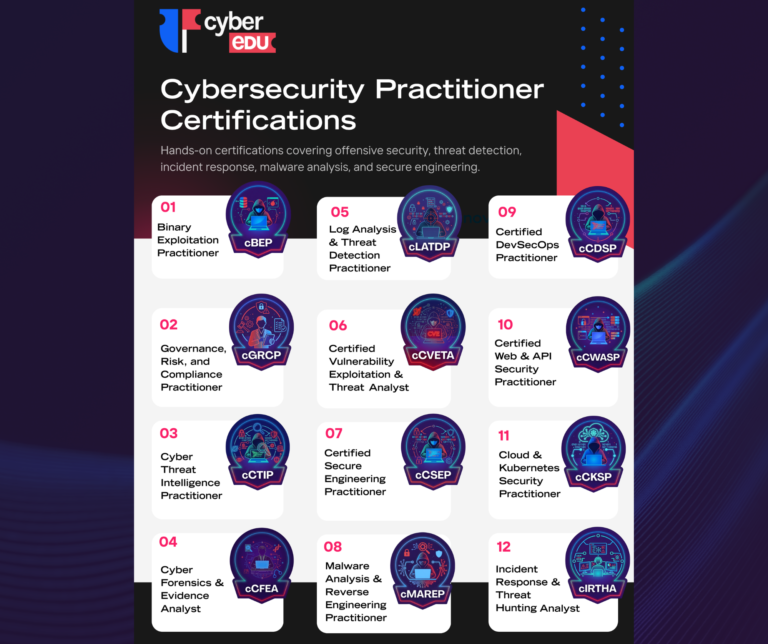
Our programs emphasize:
- hands-on labs and realistic attack scenarios;
- practical techniques used by security professionals;
- understanding modern attack methodologies;
- defensive strategies for modern infrastructures;
- skills relevant to organizations operating under new regulations such as NIS2.
Whether you are:
- a student exploring cybersecurity,
- an IT professional transitioning into security, or
- an organization strengthening its security posture,
CyberEDU training provides practical knowledge that can be immediately applied in real environments.
The future of cybersecurity belongs to skilled professionals
Cybersecurity threats will continue to evolve as attackers develop new techniques and target new technologies.
Organizations that succeed in defending themselves will not simply be those with the most security tools, but those with the most capable people.
By investing in cybersecurity training today, organizations can build the skills, resilience, and operational readiness required to face tomorrow’s threats.
And professionals who continuously develop their expertise will play a key role in shaping the future of cybersecurity.